Crypto Casinos in 2026: A Complete Guide for Polish Players — How to Choose, Play, and Win Safely
Crypto Casinos in 2026: A Complete Guide for Polish Players — How to Choose, Play, and Win Safely
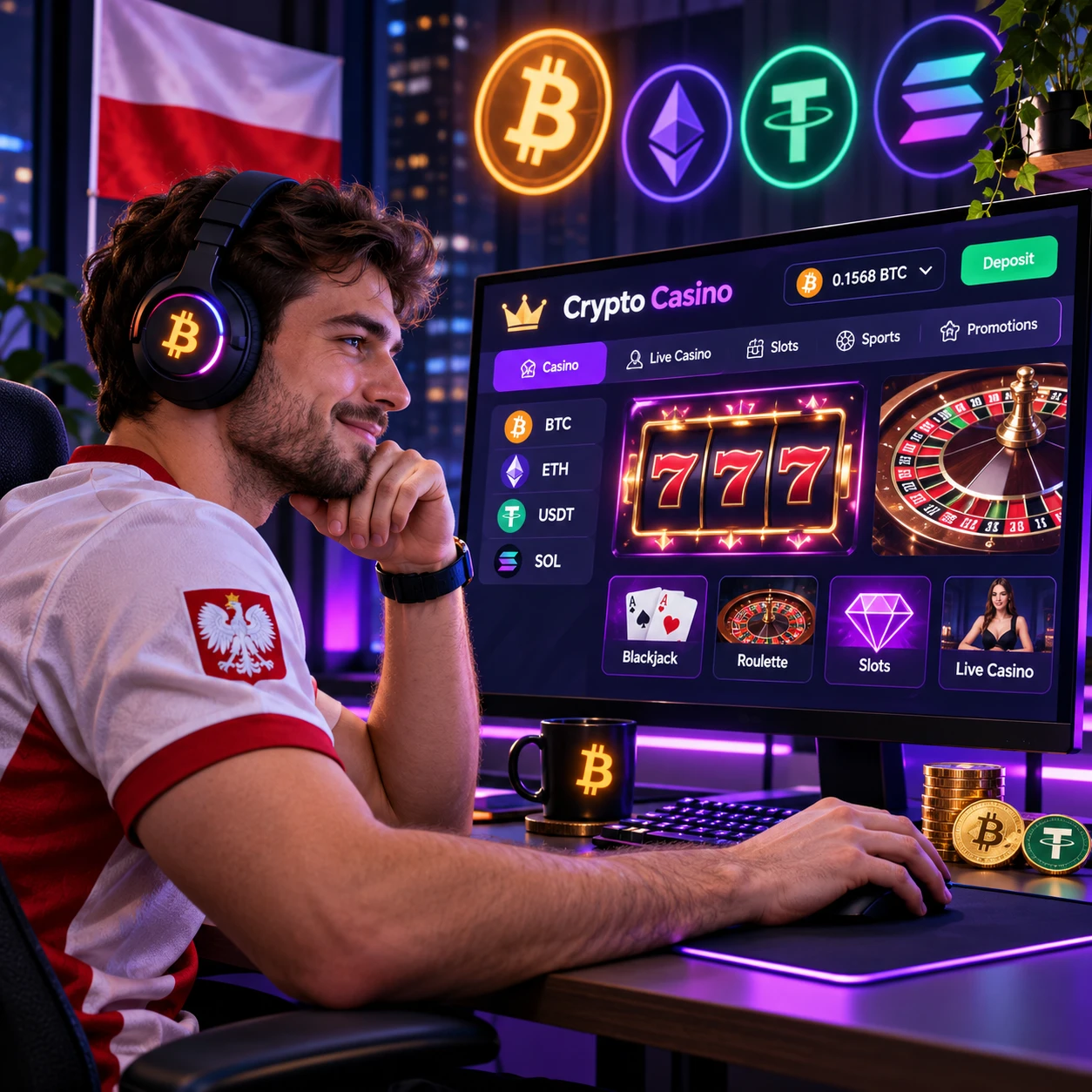
What Is a Crypto Casino and Why Are Polish Players Turning to Them in 2026?
A crypto casino is an online gambling platform that runs on digital currencies — Bitcoin, Ethereum, Litecoin, stablecoins like USDT or USDC, and a growing list of altcoins — handling everything from deposits to withdrawals. Traditional casinos lean on bank transfers and card payments. Crypto casinos run on blockchain rails instead, and that difference has real consequences for how your money moves.
The shift toward crypto gambling picked up serious pace in 2026, and I've watched it happen for practical reasons, not because of hype. Privacy plays a big role — crypto deposits don't route through the Polish banking system the same way, so there's less friction and fewer awkward questions from your bank about transfers to offshore platforms. Speed is another factor: a standard withdrawal can drag on for three to five business days through traditional channels, while a crypto payout often hits your wallet in minutes. Fees tend to be lower too, since there's no payment processor sitting in the middle collecting its cut.
Then there's the currency question. PLN-pegged stablecoins and euro-denominated stablecoins have made it easier to hold value without watching Bitcoin bounce around during your session. Fast, cheap, private, and increasingly stable — that combination is why crypto casinos have moved from a niche corner of the market to something a real share of Polish gamblers now take seriously.
The Legal Landscape for Online Gambling in Poland in 2026
Polish gambling law falls under the Ministry of Finance, which keeps a register of licensed operators approved to offer online games to Polish residents. The core legislation is the Gambling Act — it's been amended more than once over the years and stays fairly restrictive toward international operators that don't hold a Polish licence.
What the law hasn't managed yet is a dedicated regulatory framework for cryptocurrency as a payment method. That gap leaves Polish players using international crypto casinos in a legal grey area — not clearly prohibited, but not clearly protected either. Historically, enforcement has focused on operators rather than individual players. But that's not the same as saying there's no risk involved.
In practice: if you're playing at an internationally licensed crypto casino from Poland, you're probably beyond the reach of Polish enforcement as an individual — but you also lose Polish consumer protections entirely. If a dispute comes up with the platform, your options depend completely on its licensing jurisdiction and whatever dispute resolution mechanisms it offers. This is informational only. For actual legal advice, talk to a qualified Polish lawyer who understands gambling law.
How to Choose a Trustworthy Crypto Casino as a Polish Player
Not all crypto casinos are equal. The low barrier to launching one means there are real bad actors out there — platforms that look fine until they don't. Before depositing anything, there are specific things worth checking carefully. When I'm sizing up a new platform, I go through licensing first, then game fairness certification, the game library, bonus terms, supported coins, and support quality — roughly in that order.
For a broader starting point, resources like crypto casinos offer independently reviewed platform comparisons, which saves real time when you're filtering out low-quality options before doing a deeper check yourself. Using aggregator resources alongside your own due diligence is smarter than relying on either one alone.
Licensing and Provably Fair Play
The three jurisdictions that come up most are Malta (MGA licence), Curaçao eGaming, and Gibraltar. MGA is generally the gold standard — stricter player fund protection, a formal dispute resolution process. Curaçao is more permissive and much cheaper for operators to obtain, which means it covers everything from reputable platforms to outright dubious ones. Gibraltar sits somewhere between the two.
Beyond the licence, look for provably fair certification on the games themselves. This means each bet's outcome is determined by a cryptographic seed you can independently verify after the fact using a blockchain explorer. The casino publishes a hashed server seed before the game and reveals the original after, letting you confirm the result wasn't manipulated. It's a transparency layer traditional casinos simply can't match. If a crypto casino doesn't offer provably fair games on at least its core offerings, that's a signal worth taking seriously.
Bonuses, Wagering Requirements, and What to Watch For
Crypto casino bonuses come in a few forms: welcome deposit matches, no-deposit crypto bonuses (rare, but they exist), reload offers, and cashback deals. The headline number — '200% up to 1 BTC' — almost never looks the same once you actually read the terms attached to it.
Wagering requirements are where most players get burned. A 40x requirement means you need to bet forty times the bonus amount before withdrawal is on the table. On a generous welcome offer, that can translate to a serious volume of real gambling before anything converts to funds you can actually take out. Here are the specific red flags I see Polish players run into repeatedly:
- Geo-restrictions buried in bonus terms — some bonuses are unavailable to players from certain countries, including Poland, but that detail is buried in the fine print rather than disclosed upfront.
- Withdrawal caps tied to bonus activation — a cap of, say, 5x the bonus amount on winnings from bonus funds severely limits real upside even when you're running well.
- Game contribution restrictions — slots might contribute 100% toward wagering, but table games often contribute 10% or less, making it painfully slow to clear requirements if that's what you prefer.
- Short expiry windows — a 7-day window to clear a 35x wagering requirement is aggressive. In most cases it means the bonus is effectively unplayable.
Getting Started — Deposits, Wallets, and Playing Safely
If you're new to crypto gambling, there are a few setup steps worth getting right before anything hits a casino account. Start with your wallet. I'd strongly recommend a non-custodial wallet — one where you hold your own private keys — rather than keeping funds parked on an exchange. MetaMask works well for Ethereum and ERC-20 tokens; for Bitcoin, Electrum or a hardware wallet gives you direct control. The key rule: keep your casino gambling funds in a separate wallet from your longer-term crypto holdings. It reduces loss risk if something goes wrong at the casino, and it cuts the temptation to chase losses with savings.
For Polish players buying crypto to fund casino play, exchanges that support PLN on-ramps include several European platforms operating under EU regulations. KYC is standard at any regulated exchange — expect it. After purchase, move funds to your personal wallet rather than depositing directly from the exchange to the casino, since many exchanges flag direct gambling transactions.
Confirmation times vary by coin. Bitcoin typically takes 10–60 minutes for a secure confirmation; Ethereum is faster but gas fees fluctuate; Litecoin and faster-block chains settle in a couple of minutes. Factor this into session planning. Showing up late and waiting half an hour for a Bitcoin deposit to confirm is an avoidable frustration.
Which Cryptocurrencies Work Best for Casino Play in 2026
Not every coin is equally practical for casino deposits. Here's how the main options stack up for Polish players:
- Bitcoin (BTC) — universally accepted, but slower confirmation times and higher fees during busy network periods make it less ideal for smaller, frequent deposits. Best suited for larger single deposits on longer sessions.
- Ethereum (ETH) — widely accepted and faster than Bitcoin, but gas fees can be unpredictable. The post-merge network is more energy-efficient and confirmation times are solid.
- Litecoin (LTC) — fast, cheap, and accepted at most serious crypto casinos. A reliable workhorse for players who want quick deposits and withdrawals without paying high fees.
- USDT / USDC (stablecoins) — increasingly the preferred choice for Polish players who want crypto convenience without price exposure. If Bitcoin drops 8% during your session, your effective bankroll in BTC terms has shifted even if you haven't played a hand. Stablecoins cut that variable out entirely. Acceptance has grown significantly across reputable platforms through 2026.
My personal default for most sessions is USDT on a compatible chain. It removes the volatility question so I can actually focus on the game instead of watching coin prices alongside my chip count.
Common Mistakes Polish Players Make at Crypto Casinos
The same errors show up again and again, and most are avoidable with a bit of preparation:
- Depositing directly from a custodial exchange wallet. If the casino freezes your account or a dispute arises, your withdrawal goes back to your exchange wallet — but many exchanges flag incoming gambling funds and may freeze that account too. Always use a personal wallet as the intermediary.
- Chasing bonus offers without reading the terms. This one costs real money. The bonus isn't free money until the wagering requirement clears, and for most players on most offers, the house edge means the bonus expires before it converts. Treat bonuses as a slight bankroll extension, not a gift.
- Ignoring responsible gambling tools. Most legitimate platforms offer deposit limits, session reminders, and self-exclusion options. Not using them doesn't make you a disciplined player — it means you've removed your own safety net. Set a deposit limit before you start, not after a losing session.
- Not keeping personal transaction records. Polish tax law on crypto gains has evolved, and while recreational gambling winnings are treated differently from trading gains, keeping records of deposits and withdrawals is basic financial hygiene. This isn't legal advice — it's the same practice you'd apply to any financial account.
Responsible Gambling and Staying in Control
Responsible gambling tools are available at most reputable crypto casinos, and using them is smart play — not a sign of weakness. Deposit limits cap how much you can add per day, week, or month. Loss limits block further play once you've hit a threshold in a given period. Self-exclusion lets you lock yourself out for a defined window, from 30 days to permanent.
Some international platforms have adopted mechanisms similar to ROFUS (the Danish self-exclusion registry), where exclusion carries across a network of casinos rather than just one. If you're using crypto casinos for entertainment, these tools help keep it that way.
If gambling stops feeling like entertainment and starts feeling like a compulsion, Polish support is there. The Centrum Wsparcia dla Uzależnionych od Hazardu offers free support, and the problem gambling helpline is reachable at 801 889 880. No amount of winning potential is worth your financial or mental health. Treat your session budget like a ticket price for an evening's entertainment — not seed capital for income.
What to Expect from Crypto Casinos in Poland Going Forward
The regulatory picture in Poland will keep shifting. EU-level signals — through AML frameworks and broader crypto-asset regulation — are pushing member states toward clearer positions on crypto gambling. Whether that opens a formal licensing pathway for crypto-native operators in Poland or tightens restrictions is still an open question.
On the product side, 2026 is already seeing the rise of crypto-native live dealer studios that run entirely on blockchain settlement — faster, more transparent, and increasingly polished. Web3 loyalty programmes, where points and rewards are tokenised assets you actually own rather than platform credits that can vanish, are picking up traction with more serious players.
My practical advice for any Polish player: stay informed, revisit your platform choices as the landscape evolves, and prioritise platforms with real licensing and transparent operations over those chasing you with the flashiest bonuses. The best crypto casino for you in 2026 is the one that's still running cleanly and paying out fairly a year from now.